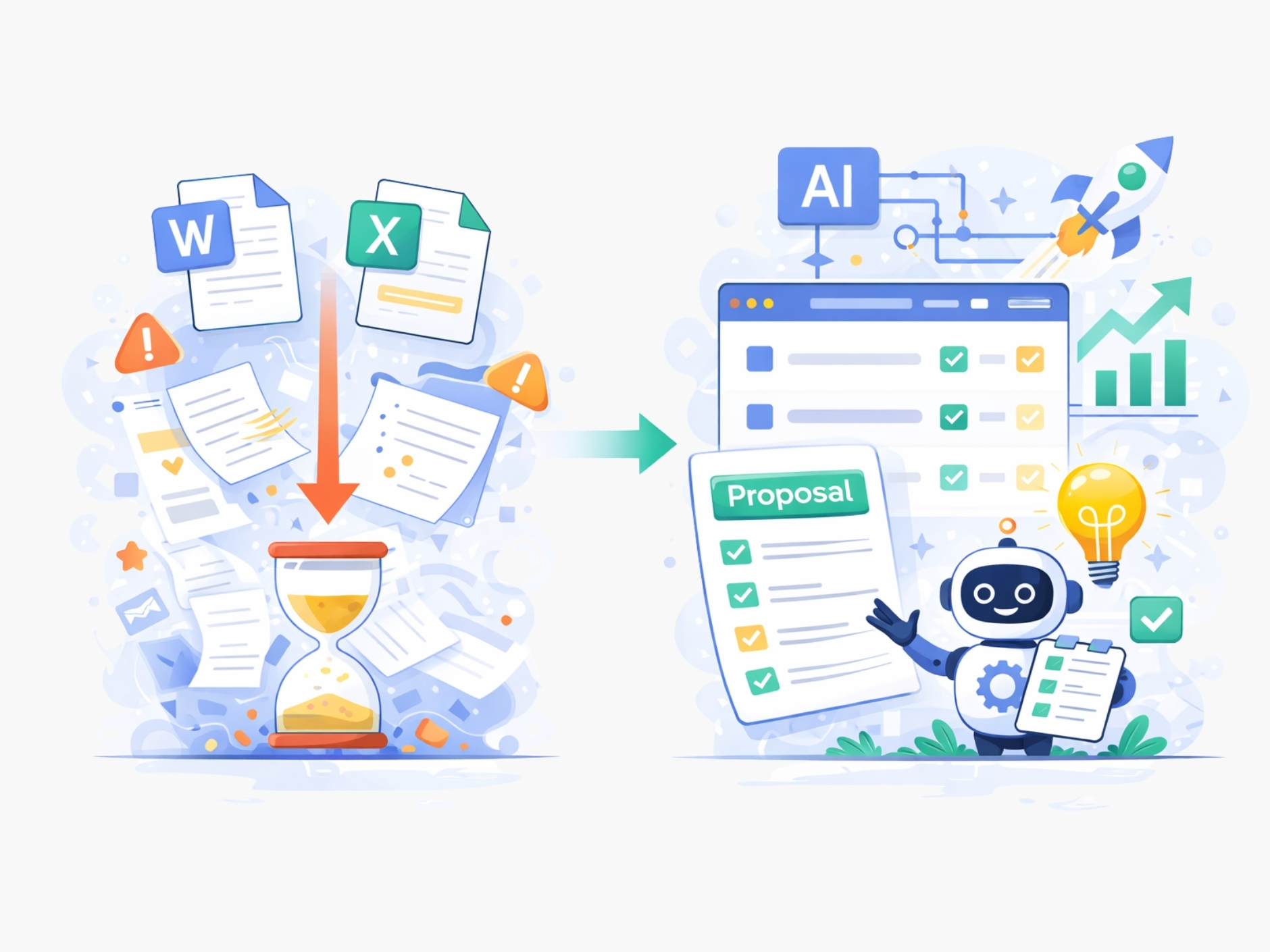
Creating a compelling software proposal is a balancing act. It requires the precision of a technical document, the persuasiveness of a sales pitch, and the clarity of a project plan. For decades, teams have relied on familiar tools like Word and Excel to piece these documents together. While widely accessible, these tools were never designed for the complex, dynamic nature of software development. The result is often a process filled with manual errors, version control nightmares, and a painful disconnect between the initial offer and the final product.
The process is often slow and prone to mistakes. Information gets lost in endless email chains, scope creep is difficult to manage, and aligning stakeholders on a single source of truth feels like an impossible task. This friction not only delays projects but also erodes client trust and team morale.
A new generation of AI-powered proposal tools is changing this landscape entirely. By introducing automation, intelligence, and structure, platforms like Storywise are transforming how software offers are created, managed, and executed. They offer a smarter way to work, ensuring that what you promise is what you can deliver, with greater speed and accuracy than ever before.
The Cracks in Traditional Proposal Methods
Before looking forward, it’s important to understand the limitations of the old way. Relying on word processors and spreadsheets for software proposals creates several recurring problems that many teams know all too well.
-
Lack of Structure and Consistency: Word documents offer a blank canvas, which sounds good in theory but leads to inconsistency in practice. Different people use different formats, making proposals hard to compare and review. Key details can be easily missed.
-
Version Control Chaos: Is Proposal_Final_v3_rev2.docx really the final version? Without a centralized system, teams waste countless hours trying to track changes, leading to confusion and the risk of working from outdated information.
-
Manual and Error-Prone Work: Copying and pasting requirements, manually calculating costs in Excel, and ensuring all dependencies are noted is tedious work. Each manual step is an opportunity for human error, from simple typos to significant miscalculations that can derail a project’s budget.
-
The Disconnect from Development: A proposal created in Word or Excel is a static document. It exists in a silo, separate from project management tools like Jira. The approved scope must be manually transferred, a process where crucial context and details are often lost.
These inefficiencies don’t just waste time; they create risk. Ambiguous proposals lead to scope disputes, inaccurate estimates hurt profitability, and a messy process undermines client confidence.
How AI is Revolutionizing Software Offers
AI-powered proposal tools are not just a digital version of the old process. They fundamentally restructure the workflow to be more intelligent, integrated, and efficient. Here’s how they are making a difference.
1. Automated Requirement and Story Generation
One of the most time-consuming parts of creating a proposal is translating client needs into well-defined requirements, user stories, and acceptance criteria. AI excels at this. You can feed the system a client brief from PDF or rough notes from Figma or Miro, and the AI will generate structured, consistent requirements.
For example, a simple client request like “We need a user login system” can be automatically expanded into detailed user stories for registration, login, password reset, and two-factor authentication, complete with pre-defined acceptance criteria. This ensures nothing is overlooked and provides a solid foundation for accurate estimation. The task of writing requirements, which could take hours of manual work, is reduced to minutes.
2. Intelligent Version Comparison and Traceability
Imagine a client wants to see two versions of a proposal: a baseline version and another with an expanded feature set. With traditional tools, this means creating and managing two separate documents, making it difficult to spot the differences.
AI tools solve this with smart versioning. You can create different feature sets or releases and let the client toggle between them. The tool instantly highlights the changes in scope and cost. Furthermore, every requirement is traceable back to its origin. If a stakeholder questions why a certain feature is included, you can instantly show its connection to the initial business goal, eliminating ambiguity.
3. Seamless Integration with Project Management
This is where AI-powered tools deliver one of their biggest wins. The proposal is no longer a dead-end document. Once the client approves the offer, the structured data—epics, user stories, and tasks—can be synced directly into your team’s project management tool, such as Jira.
This seamless handoff ensures that the development team starts with a clean, organized, and complete backlog. The context, dependencies, images and acceptance criteria are all preserved. There is no manual data entry, no lost information, and no gap between the sales promise and the development reality. The entire process, from initial conversation to the first line of code, becomes a single, connected workflow.
4. Unmatched Speed and Accuracy
By automating repetitive tasks and enforcing consistency, AI dramatically reduces the time it takes to create a high-quality proposal. Estimates become more accurate because they are based on well-defined and complete requirements. The risk of manual errors in calculations or overlooked dependencies is virtually eliminated.
This speed allows agencies and software teams to be more responsive to client requests. You can turn around detailed, professional proposals faster, giving you a competitive edge. Improved accuracy means fewer budget overruns and a healthier bottom line. Most importantly, it leads to higher client satisfaction, as projects start on the right foot and deliver on their promises.
A Glimpse into the Future
The impact of AI on software proposals is only just beginning. As the technology matures, we can expect even more sophisticated capabilities. Imagine AI assistants that can analyze past project data to predict potential risks in a new proposal or suggest optimal resource allocation based on the proposed scope. We may see tools that can generate interactive prototypes directly from the requirements, giving clients a tangible feel for the product before development even starts.
The core trend is clear: AI is moving the industry away from static documents and toward dynamic, intelligent project planning. The “proposal” will become less of a document and more of a living, collaborative workspace where clients and teams can align on goals, scope, and value from day one.
For software companies and agencies, adopting these tools is no longer a question of “if,” but “when.” The efficiency gains, risk reduction, and improvements in client satisfaction are too significant to ignore. The future of software offers is here, and it’s powered by intelligence.
Ready to build faster, more accurate software proposals?
Discover how Storywise uses AI to eliminate manual work, ensure clarity,
and connect your proposals directly to your development workflow.
Learn more and start your journey to a
smarter proposal process.