Navigating the world of software development can be complex, especially during the early planning stages. From drafting initial ideas to comparing detailed proposals, the process is filled with potential pitfalls that slow down projects and inflate budgets. Many agencies, product managers, and developers face the same challenges but struggle to find effective solutions.
To bring clarity to this process, we’ve compiled and unified our most frequently asked questions about software requirements and proposals. Here, we address common pain points and explain how modern tools like Storywise can help you work faster, improve accuracy, and make better decisions.
1. How can I create software requirements faster?
This is the most common challenge. The traditional method of manually writing user stories, acceptance criteria, and technical specifications in documents or spreadsheets is incredibly time-consuming.
To speed up the process, you need to shift from manual drafting to automated assistance. AI-powered tools make a significant impact here. Instead of writing everything from scratch, you can use a tool that analyzes raw input—like client notes, meeting transcripts, or design files—and automatically generates structured requirements.
How Storywise Helps:
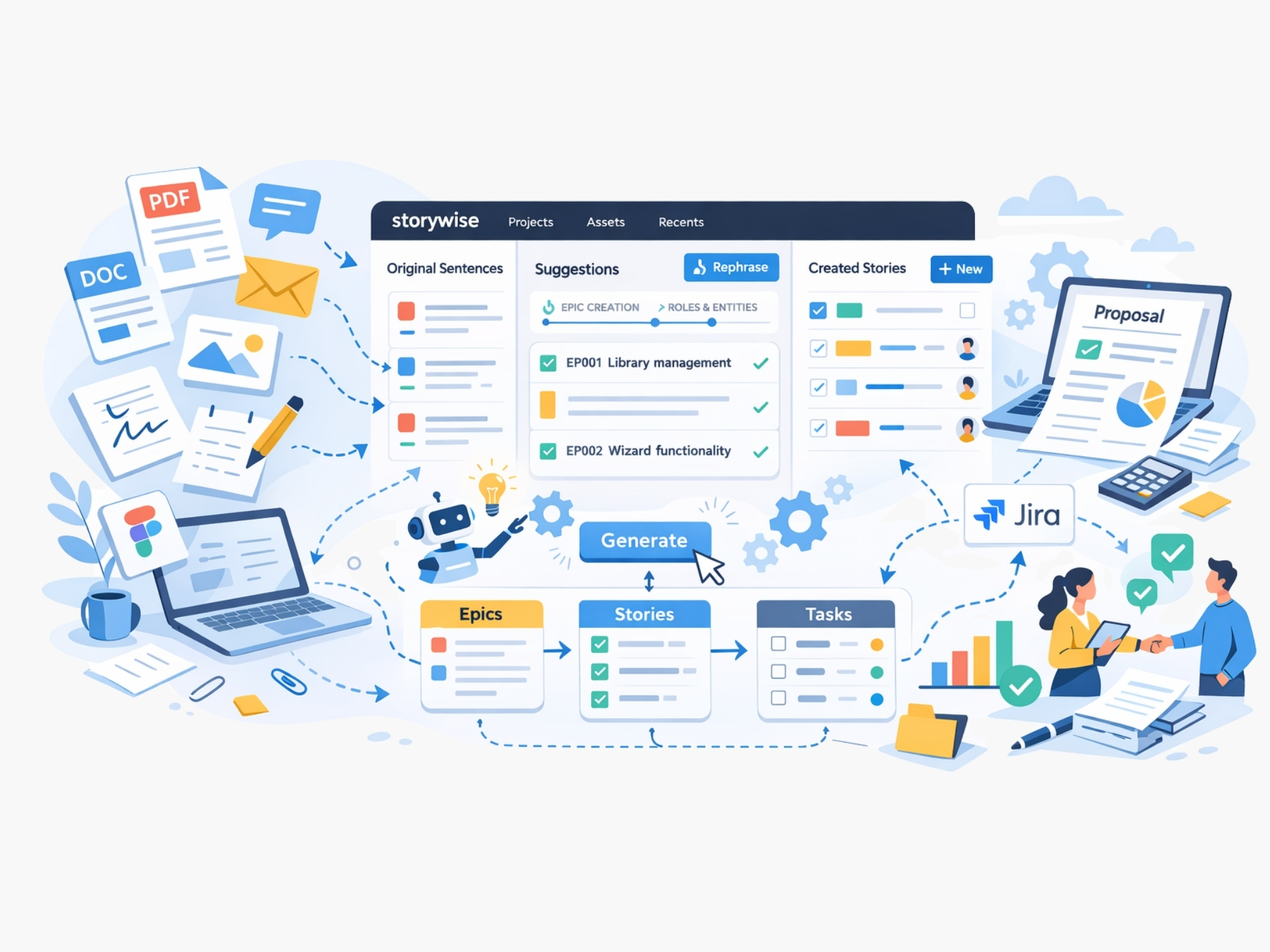
Storywise uses AI to turn unstructured text into organized epics and
user stories in seconds. You can import information from PDFs, images,
and other sources, and its “Wizard” feature will suggest complete
requirements. This allows you to move from being a writer to an editor,
which can reduce the time spent on creating requirements by over 60%.
2. What is the best tool for creating software proposals?
The “best” tool is one that bridges the gap between sales and development. Microsoft Word or Google Docs are flexible but lack the structure needed for accurate cost estimation and a clean handoff to developers. Project management tools like Jira are great for development but are not designed to create client-facing proposals.
An ideal proposal tool for software should offer:
-
Structured data for accurate estimates.
-
Professional, client-friendly export options.
-
Seamless integration with development tools.
-
Features for comparing different scope options.
How Storywise Helps:
Storywise is built specifically for creating software proposals. Because
every requirement is a structured data object, you can automatically
calculate costs. You can also create different versions of a proposal to
show clients how scope changes impact the budget. When you’re ready, you
can export a polished proposal in Word or PDF format with a single
click.
3. How can I better compare proposals from different agencies?
Comparing proposals is difficult when they arrive in different formats and with varying levels of detail. This makes a true “apples-to-apples” comparison nearly impossible, forcing you to guess which offer provides the best value.
The key to effective comparison is having all vendors quote on the exact same set of requirements within a single, standardized platform. When everyone works from the same structured brief, you can directly compare costs, timelines, and proposed solutions for each feature.
How Storywise Helps:
For product managers and procurement teams, Storywise standardizes the
bidding process. You create your product requirements document (PRD)
within the platform and invite vendors to submit their quotes directly
in the tool. Storywise then presents the offers in a side-by-side
comparison view, empowering you to make a data-driven decision with full
transparency.
4. What are the risks of using Word and Excel for requirements?
Using general-purpose tools for software requirements introduces several risks:
-
Lack of Version Control: It’s easy to lose track of which version is current.
-
Manual Data Transfer: Copying and pasting requirements into tools like Jira is prone to human error.
-
No Traceability: It is difficult to track a requirement from the client’s request through to development.
-
Inaccurate Estimations: Without a structured format, automating cost calculations is impossible.
How Storywise Helps:
Storywise provides a single source of truth. All requirements are
structured, versioned, and linked to their original source. The seamless
Jira integration ensures that when a proposal is approved, all the
structured data is synced perfectly, eliminating manual data entry.
5. How can my agency win more bids without working overtime?
The key is to increase the speed and quality of your proposals. By automating the repetitive tasks of requirements writing and estimation, you can respond to leads much faster.
How Storywise Helps:
Storywise allows your team to generate detailed, accurate proposals in a
fraction of the time. This gives you a competitive edge and frees up
your senior talent to focus on billable work instead of administrative
tasks.
6. How do I turn scattered client feedback into actionable user stories?
Product managers often receive feedback from various sources like emails, meeting notes, and design files. Manually consolidating this is inefficient.
How Storywise Helps:
With Storywise, you can import all these different sources into a single
workspace. The AI analyzes the content and suggests structured user
stories and epics. This ensures no requirement is missed and provides
full traceability back to the original source.
7. How can I understand the “why” behind a feature request?
Context is critical for making good technical decisions. In Storywise, every user story is linked back to the original client request or business goal. This unbreakable traceability gives you the full context, helping you understand the purpose of a feature and build a better final product.
Make Your Requirements Process Smarter
Relying on outdated tools for software requirements is a recipe for inefficiency and miscommunication. By embracing a structured, AI-powered workflow, you can deliver better proposals, make more informed decisions, and ensure your development projects start on the right foot.
Ready to see the difference for yourself? Try Storywise today and transform how you manage software requirements.