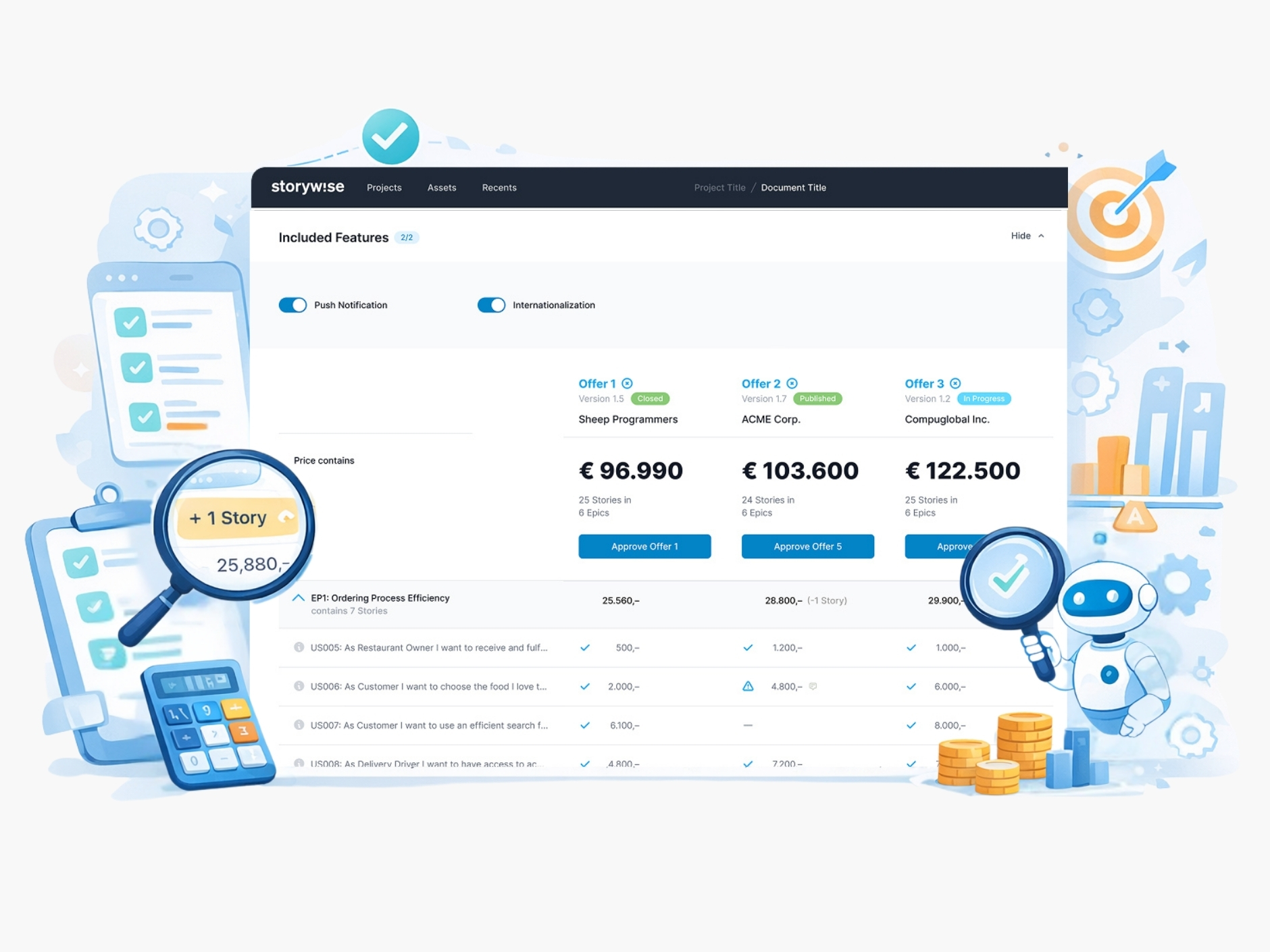
Choosing the right software proposal can determine the success or failure of a project. Whether you’re a product manager deciding between feature sets or a client evaluating offers from different agencies, the decision is critical. You need to weigh scope, cost, and timelines to find the best fit. However, the process of comparing these proposals is often messy, confusing, and filled with manual effort.
Trying to align two proposals formatted differently—one in a Word document, another in a sprawling spreadsheet—is a significant challenge. Key details are often buried, formats are inconsistent, and understanding the real differences requires hours of painstaking review. This manual comparison is not just inefficient; it’s risky. A missed detail or a misunderstood line item can lead to scope creep, budget overruns, and a final product that doesn’t meet expectations.
What if you could instantly see the differences between two proposal versions, side-by-side, in a clean and structured format? AI-powered tools like Storywise are making this a reality. They transform the chaotic task of proposal comparison into a simple, data-driven process, empowering teams to make faster and more informed decisions.
The Traditional Way: A Recipe for Confusion
Comparing software proposals using conventional methods is a familiar struggle. The documents you receive often vary wildly in structure, detail, and clarity, creating a set of common challenges that hinder effective decision-making.
-
Inconsistent Formats: One team sends a 20-page PDF, another sends a multi-tab Excel file. There’s no standard format, forcing you to manually hunt for corresponding information. Is “User Authentication” in one document the same as the “Login & Security” section in another? The lack of uniformity makes a true apples-to-apples comparison nearly impossible.
-
Hidden or Missing Details: Critical information is often buried in long paragraphs or missing entirely. One proposal might detail acceptance criteria for each feature, while another offers only vague, high-level descriptions. This forces you to chase down answers and make assumptions, increasing the risk of miscommunication.
-
The Nightmare of Version Tracking: The comparison process often involves multiple revisions. A stakeholder might ask, “What’s the difference between the ‘Basic’ and ‘Premium’ versions of this offer?” Answering this question typically involves opening two separate files and manually spotting the changes—a tedious and error-prone task. Keeping track of Proposal_v1.docx, Proposal_v2_comments.docx, and Proposal_v2_FINAL.docx is a recipe for confusion.
-
Difficulty Communicating Differences: Explaining the trade-offs between proposals to other stakeholders is tough when the data is disorganized. You end up creating another document—usually a spreadsheet—just to summarize and compare the options, adding yet another layer of manual work to your plate.
This broken process doesn’t just waste time. It leads to poor decisions based on incomplete or misunderstood information, ultimately impacting project outcomes and straining client relationships.
A Smarter Way to Compare: How AI Tools Bring Clarity
AI-powered proposal platforms are built to solve these exact problems. They act as a central hub where all proposal information is structured, standardized, and easily comparable. Instead of wrestling with disparate documents, you work within a system designed for clarity and analysis.
1. Standardized, Structured Data
The biggest advantage of using a dedicated tool is that all proposals are built from the same structured blocks. Whether it’s an epic, a user story, or a technical requirement, the information is organized consistently. This means when you compare two proposals—or two versions of the same proposal—you are always comparing like with like. The system enforces a uniform structure, so you can stop wasting time trying to decipher different layouts and focus on the substance of the offer.
2. Automated Highlighting of Differences
This is where AI tools truly shine. Imagine you have two versions of a proposal: a Minimum Viable Product (MVP) and a full-featured version. With a tool like Storywise, you can select both versions and instantly see a side-by-side view that makes differences immediately visible. The platform clearly shows which user stories or features are included in one version but not the other, helping you quickly identify added or removed elements. This structured comparison reduces hours of manual work to seconds, removes the guesswork, and ensures that every stakeholder can clearly see the trade-offs between different options.
-
Added or Removed Features: The tool will clearly flag which user stories or features are included in one version but not the other.
-
Cost Differences: You can immediately see how the overall project cost is impacted in each version, with costs for specific features or versions listed side-by-side for easy comparison.
This automated comparison reduces hours of manual work to seconds. It removes the guesswork and ensures that every stakeholder can clearly see the trade-offs between different options.
3. Customizable Views for Every Stakeholder
Different stakeholders care about different things. A CTO may want to drill down into the technical specifications, while a CEO might only be interested in the top-line cost and timeline. Traditional documents offer a one-size-fits-all view that rarely satisfies everyone.
AI-powered tools provide customizable views that allow each stakeholder to see the information that matters most to them. You can filter the comparison to show:
-
A high-level summary of features and costs.
-
A detailed view of all user stories and acceptance criteria.
-
The specific changes made between two release versions.
This flexibility ensures that conversations are productive and focused. Everyone is looking at the same source of truth but can tailor the view to their specific needs, making alignment and buy-in much easier to achieve.
4. Making Faster, More Confident Decisions
By providing clear, structured, and easily comparable data, these tools empower teams to make decisions with speed and confidence. There is no more ambiguity or fear of missing a critical detail. When you choose a proposal, you know exactly what is included, why it’s there, and what it will cost.
For agencies, this means you can present options to clients with unparalleled clarity, building trust and accelerating the sales cycle. For product teams, it means you can confidently commit to a scope of work, knowing that it aligns with your budget and resources.
From Comparison to Action, Seamlessly
The benefits of using an AI-powered proposal tool don’t end once a decision is made. Because the proposal is already structured within the system, it can be seamlessly converted into an actionable project plan. With a single click, the approved epics and user stories can be synced to project management tools like Jira.
This creates a perfect link between the initial agreement and the development workflow, ensuring that the team builds exactly what the client approved. The clarity gained during the comparison phase is carried through the entire project lifecycle.
The days of manually comparing messy documents are numbered. The future of decision-making is data-driven, automated, and clear. By embracing tools that simplify comparison, you can eliminate friction, reduce risk, and set your projects up for success from the very beginning.
Ready to make proposal comparisons effortless?
See how Storywise can help you compare versions, highlight differences
automatically, and make better decisions, faster. Explore
Storywise for your next project and
experience the power of clarity.